ServicesWhole-Home Rewiring
Whole-Home Rewiring in Forest Hill
Old wiring rarely fails all at once. It gives you warm outlets, flickering lights and breakers that trip for no clear reason. We look at what you have, tell you what needs replacing first, and lay out a plan you can do in one stretch or in phases.
When Rewiring Is the Right Call
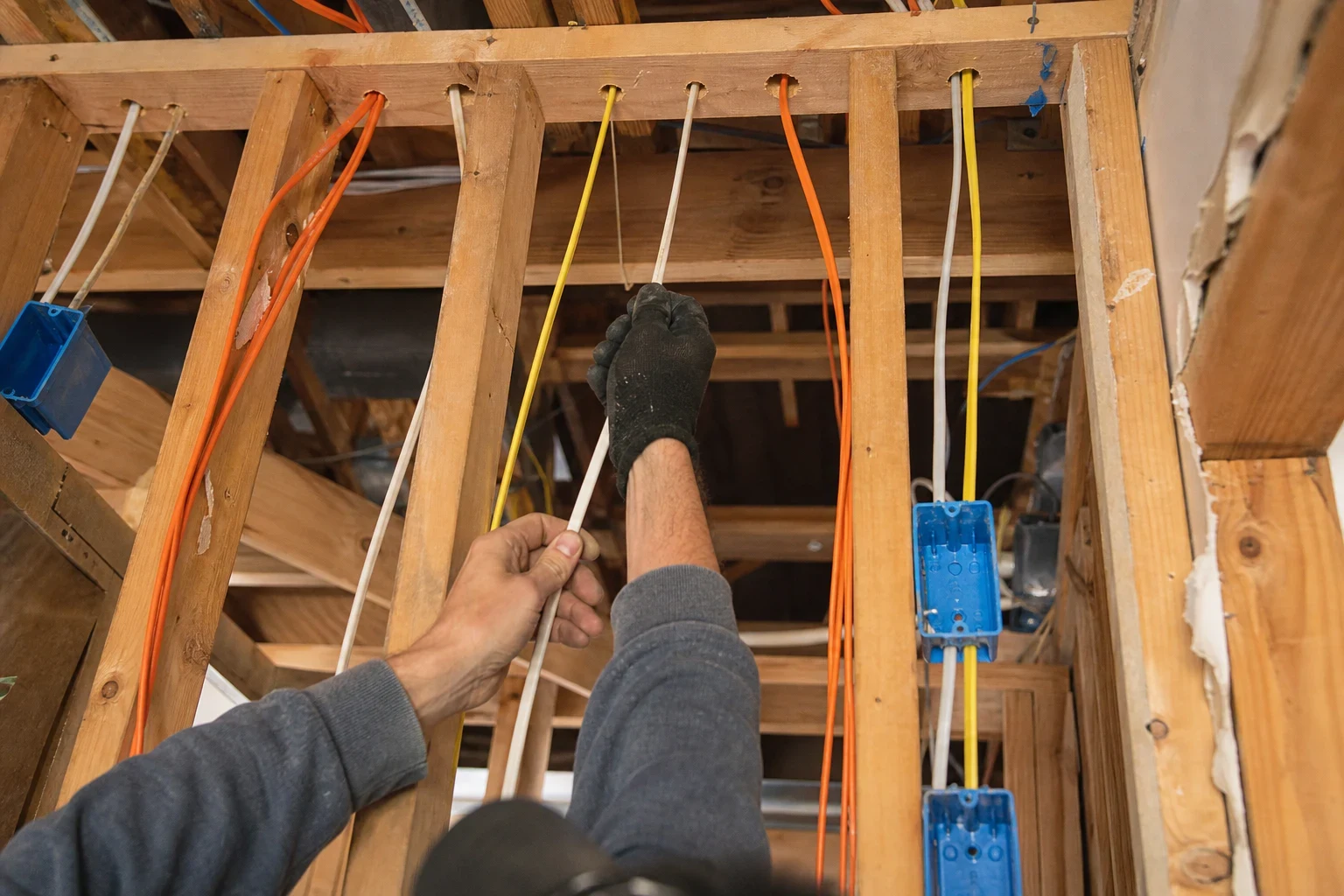
Rewiring means pulling out old circuits and running new cable, boxes and grounded outlets through your home. It makes sense when the wiring itself is the problem. That could be cloth-covered cable, brittle insulation, ungrounded two-prong outlets, or aluminum branch wiring with loose, heat-damaged connections.
Not every older house needs a full rewire. Sometimes a few bad circuits are the real trouble, and an electrical repair visit is enough. We will tell you which one you are looking at and show you why.
The best time to rewire is before something forces it. If you plan ahead, you can pick the season, set the budget and pair the work with a remodel or a panel upgrade instead of paying for two separate jobs. With 5 years in business, our licensed and insured electricians have done this work in plenty of homes like yours.
What the Work Includes
- A full look at your current wiring
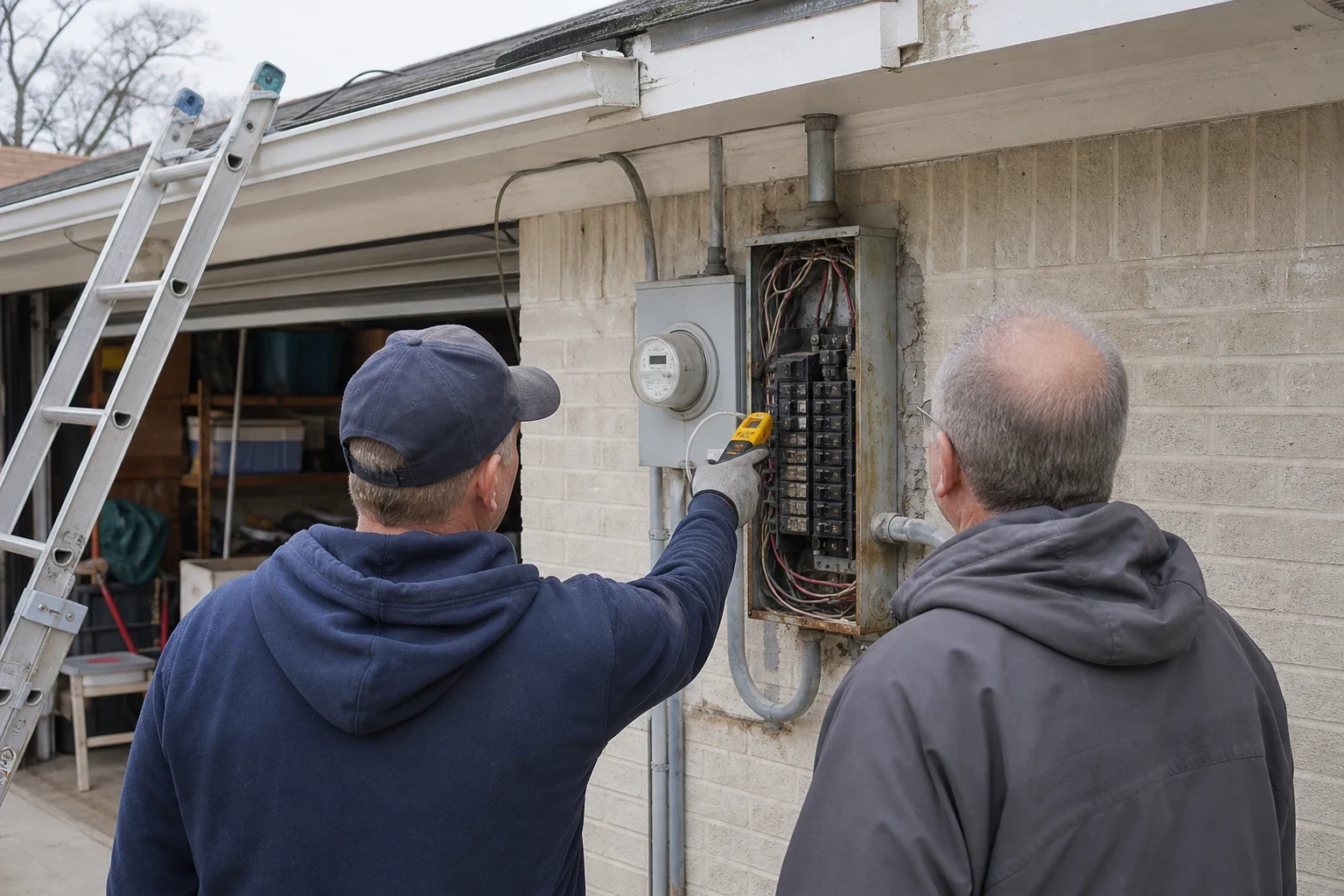
- We open panels, pull a sample of outlets and switches, and check the attic where cable runs are visible. You get photos of what we found and a plain explanation.
- New cable and grounded circuits
- We run new copper cable with a ground to each room. Old two-prong outlets get replaced with grounded ones, and GFCI and AFCI protection goes where code calls for it.
- New boxes, outlets and switches
- Worn boxes and cracked devices come out. If you want more outlets in a room, this is the cheapest time to add them.
- Dedicated circuits where you need them
- Kitchens, laundry, window units and home offices often need their own circuits. We plan those in now so you are not adding them later.
- Permit and inspections
- We pull the permit and schedule inspections as required by the local jurisdiction. The inspector sees the work before walls are closed up.
- Patching our access holes
- We cut small openings to fish wire through walls and ceilings, then patch them. Paint touch-up is usually left to you or your painter, and we say so up front.
Signs Your Wiring Is Due
Outlets or switch plates feel warm
Heat at a device means a loose or failing connection. That is worth a look soon, not someday.
Lights dim when the AC kicks on
Some dimming is normal. A lot of it, or flickering that spreads across rooms, points to tired circuits or loose connections.
Two-prong outlets all over the house
These usually mean no ground. Surge protectors and many appliances do not work the way they should without one.
Cloth-covered or crumbly cable in the attic
Long Texas summers bake attic wiring. Old insulation gets brittle and can crack when anyone moves it.
Breakers that keep tripping
One overloaded circuit is a repair. Trips in many rooms often mean the whole system was never sized for how you live now.
What Moves the Cost
Every house is different, so we price rewiring after we have seen yours. The written plan breaks the job into parts, so you can see where the money goes and decide what to do now and what can wait.
Size and layout
More rooms mean more circuits and more cable. Two-story homes take more time to fish wire between floors.
Access to walls and attic
An open attic and crawlspace make runs faster. Plaster walls, finished ceilings and tight spaces add labor.
Panel condition
If your panel is too small or worn out, it may need a panel upgrade at the same time. Doing both together usually costs less than two visits.
Added circuits and outlets
New dedicated circuits, extra outlets and outdoor receptacles add to the scope. Adding them during a rewire is still cheaper than later.
Phasing
Doing the work in phases spreads out the cost. Each phase has its own setup, so one stretch is often a little less in total.
How a Rewiring Job Runs
- 1
Service visit and walkthrough
We walk your home with you, check the panel and sample the wiring. We ask how you use each room so the new layout fits.
- 2
Written plan and phases
You get a written scope that lists each area, what gets replaced and in what order. If budget matters, we split it into phases, starting with the circuits that worry us most.
- 3
Permit and prep
We pull the permit and set a start date. On the first day we cover floors, move furniture away from walls and mark which rooms will be without power.
- 4
Room-by-room work and rough inspection
We work one section at a time, so most of your home keeps power while we work. Once new cable is in, the inspector checks it before we close up.
- 5
Final check and cleanup
We test every circuit, label the panel and pass the final inspection. Then we clean up and walk you through what changed.
Rewiring Questions We Hear
How long does a whole-home rewire take?
Plan on several days for a smaller house and more for a bigger one. Square footage matters, and so does how easy it is for us to get into the walls and attic. Inspections also leave short gaps between stages. Your written plan includes a schedule, so you know the timeline before any work starts.
Do I have to move out while you work?
Most people stay home. We work one area at a time, so only part of the house is without power on any given day. We tell you the night before which rooms will be off.
Will you tear up my walls?
No. We fish new cable through existing walls and cut small openings only where we have to. We patch those openings ourselves. If you are planning a remodel, rewiring then saves even more wall work, and our remodel and addition wiring page covers that.
Can I spread the work out over time?
Yes. We list the areas in order of risk, so the worst circuits get done first. You can do the rest when the budget allows, and each phase is permitted and inspected properly.
Do you pull the permit?
Yes. We pull the permit and handle inspections as required by the local jurisdiction. You do not have to deal with the paperwork or meet the inspector unless you want to.
I have aluminum wiring. Does it all have to come out?
Not always. Some homes can have connections repaired with approved methods, while others are better off with new copper. We look at the condition and explain both options before you decide.
Plan Your Rewire Before It Gets Urgent
A service visit gets you photos of your wiring, a written plan and a clear idea of what to tackle first. We work in Forest Hill and nearby towns like Kennedale, Everman and Fort Worth.