ServicesGenerator Installation
Generator Installation in Forest Hill
We size a generator to what your home actually needs to run, wire it through a proper transfer switch, and handle the permit and inspection. The best time to do this is a calm week, not the night the power goes out.
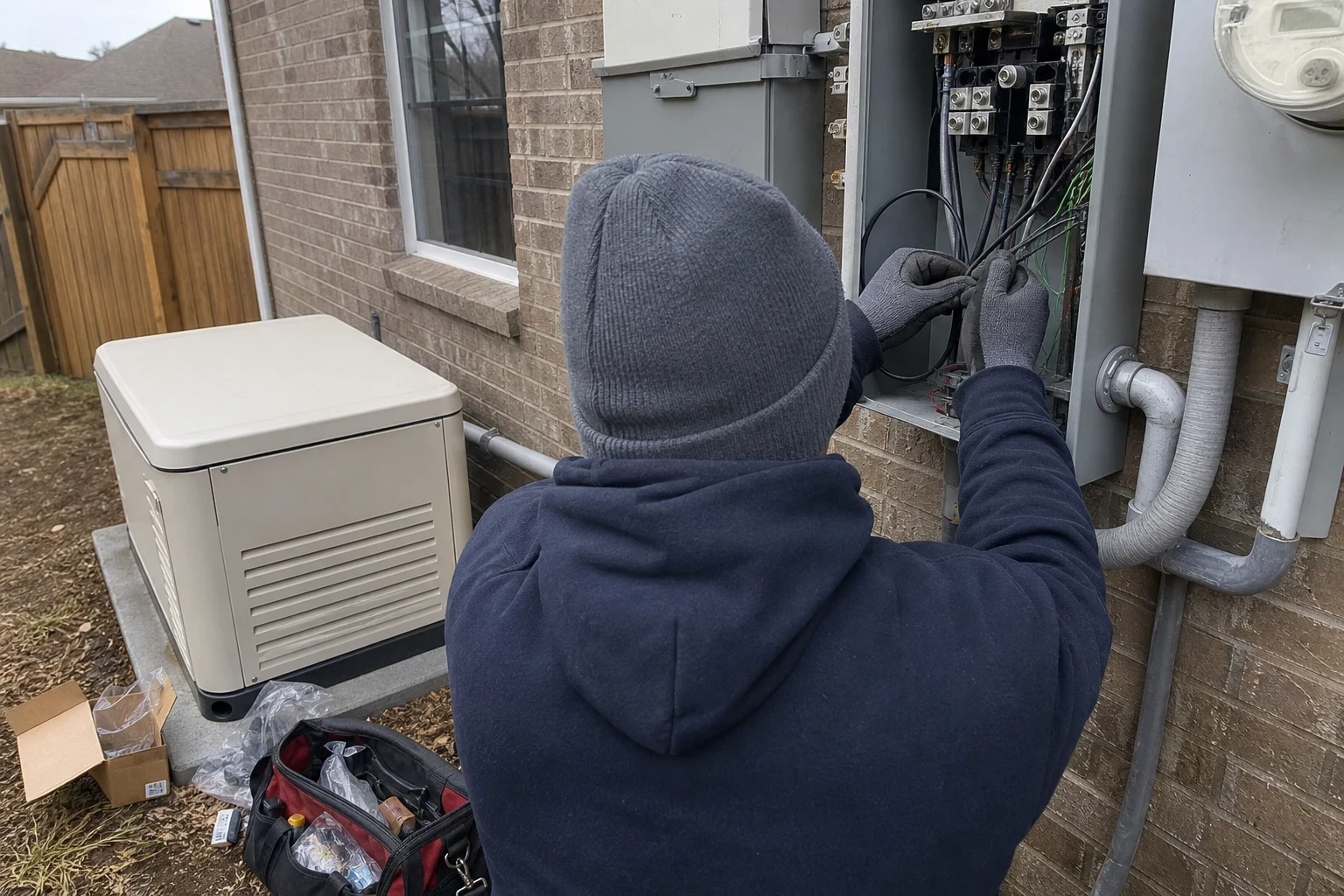
Backup power that's planned, not rushed
A generator only helps if it's connected the right way. That means a transfer switch or approved interlock, so your home is cut off from the utility lines while the generator runs. Without one, power can feed back onto the lines and hurt a lineworker, or damage the generator when the grid comes back.
We install permanent standby units that start on their own, and we set up inlet and interlock hookups for portable generators. Both work. The right one depends on what you want running during an outage and how much you want to spend.
Summer storms and the occasional winter ice storm both knock out power around here. Getting a generator in place before those seasons means you pick the unit and the timing, instead of taking whatever is left on the shelf.
What the job includes
- Load calculation
- We list what you want powered, like the fridge, furnace blower, well pump or AC, and work out the wattage. That tells us what size unit you need, so you don't overpay for one that's too big or end up with one that trips under load.
- Transfer switch or interlock
- Standby units get an automatic transfer switch. Portable setups get a manual switch or a panel interlock with an outdoor inlet. Either way, the generator and the utility can never feed your home at the same time.
- Panel check
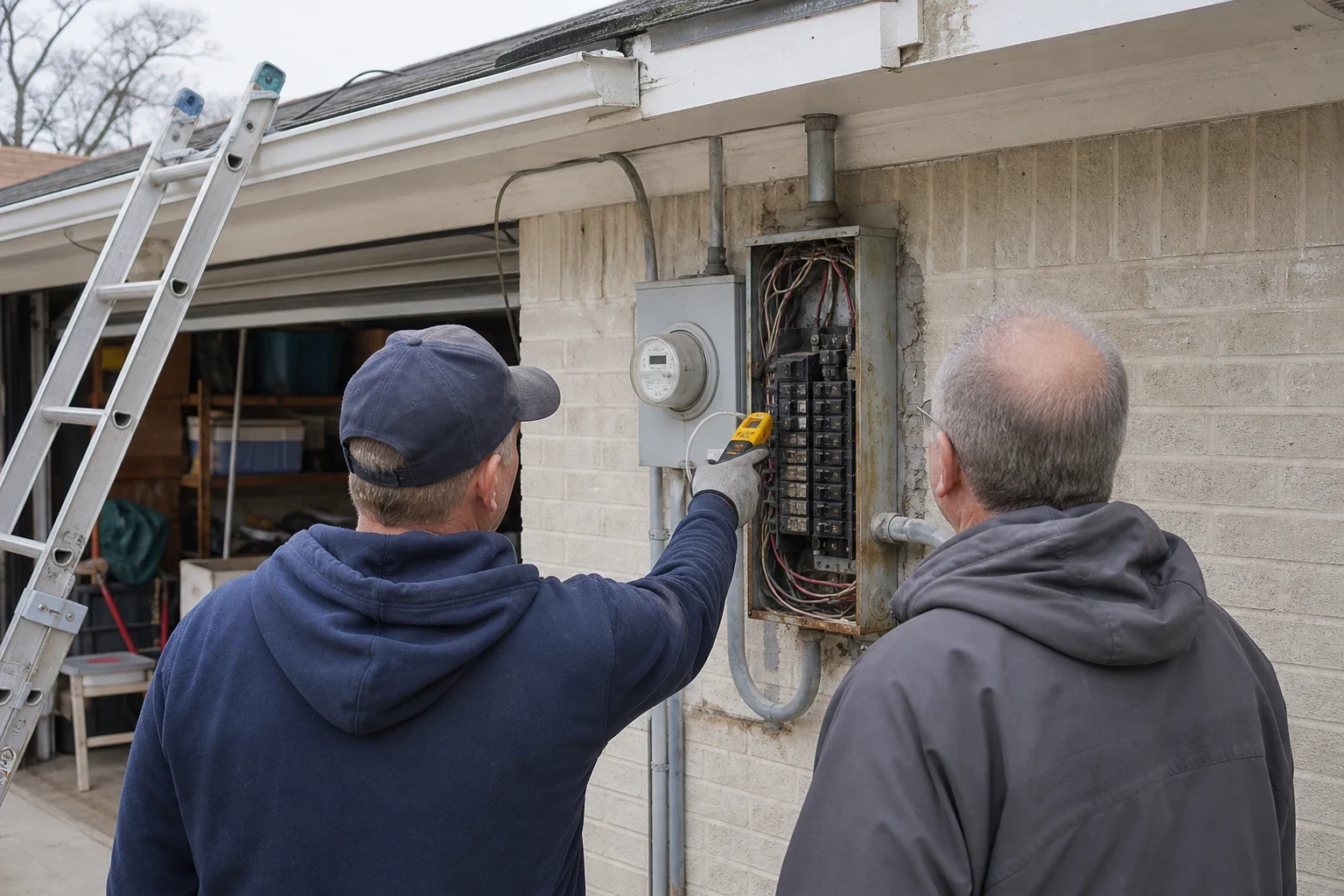
- We look at your main panel before anything else. If it's full, worn or an older model that won't take an interlock, we'll tell you up front. Sometimes a panel upgrade makes sense to do at the same time.
- Placement and wiring
- Standby units go on a pad outside with the clearance the manufacturer requires from windows, doors and vents. We run the wiring from the unit to the transfer switch and set it up to code.
- Permit, inspection and startup
- We pull the permit as required by the local jurisdiction and meet the inspector. Then we test a full transfer with you watching and show you how the system works.
Times a generator makes sense
A family member depends on electricity
CPAP machines, oxygen concentrators and refrigerated medicine can't sit through a long outage. A generator keeps them going.
Your job is at home
When losing the modem and laptop means losing a day's pay, backup power earns its cost back fast.
Extension cords have been your backup plan
Running cords through a propped-open window invites fire and carbon monoxide. With an inlet and interlock, the portable plugs in safely outdoors.
The last outage spoiled food or froze pipes
A stocked fridge and freezer, or pipes exposed when the heat quits, get costly quickly. A properly sized small unit handles both.
Your home has a well pump or sump pump
Without power, there's no water or no drainage. We put those loads near the top when sizing a unit.
What drives the price
Generator jobs can land far apart in price. The gap mostly comes from how big the unit is and what your panel and yard need to support it. Your written estimate lays out each part so you can review it before deciding.
Size and type of unit
A standby unit for the whole house runs higher than a portable hookup or a smaller unit that powers a handful of key circuits.
Switching equipment
An automatic transfer switch is pricier than a manual switch or panel interlock, but it works whether or not you're home.
Where the unit goes
Every extra foot between the unit and your panel means more wire and trenching. A flat spot near the panel keeps that cost low.
State of your panel
If the panel needs replacing or more space first, the job grows. We show you the reason before anything begins.
Fuel and permit fees
Gas line work, plus the permit and inspection fees the local jurisdiction sets, are included in the total.
Steps in a generator install
- 1
Planning visit
We check your panel, look at spots where the unit could sit and talk about what you want powered. Then you get a written estimate with parts and labor listed separately.
- 2
Permit and work date
We apply for the permit and book the install. For natural gas or propane units, we tell you who runs the gas line and coordinate the timing.
- 3
Install day
Your power is off for a portion of the day while the transfer switch goes in. We give you a rough length of time beforehand so you can plan.
- 4
Inspection and walkthrough
Once the inspector approves the job, we run a test transfer and show you the monthly checks. Yearly upkeep is available through our generator service and repair work if you'd like it.
Common generator questions
Standby generator or portable with an interlock: which is right?
A standby unit turns on by itself and can carry most or all of the house. A portable setup is cheaper, but you roll it out, start it and switch over by hand. We'll price both for your home so you can weigh them.
What size generator does my home need?
That comes down to what you want running at the same time. Central AC and electric water heaters draw heavily. On the planning visit we run a load calculation instead of guessing from the size of the house.
Will you get the permit?
Yes. We pull it the way the local jurisdiction requires and meet the inspector. The paperwork stays off your plate.
Who handles the install?
The electrical work is done by our licensed and insured electricians. Generator hookups have been a steady part of our 5 years in business.
Is it OK to plug a generator into my dryer outlet?
No. Doing that pushes power back onto the utility lines, which can kill a lineworker or set your house on fire. An inlet with an interlock gives you the same result safely.
Get your generator in before the next outage
We'll come look at your panel and yard, size the unit and give you a written estimate. You pick when the work happens.