ServicesHome Battery Backup
Home Battery Backup Systems in Forest Hill
A home battery keeps your fridge, lights, internet and other key circuits running when the grid drops. We work out what you need to power, size the system to match and install it cleanly, so you know the cost and the plan before the next outage.
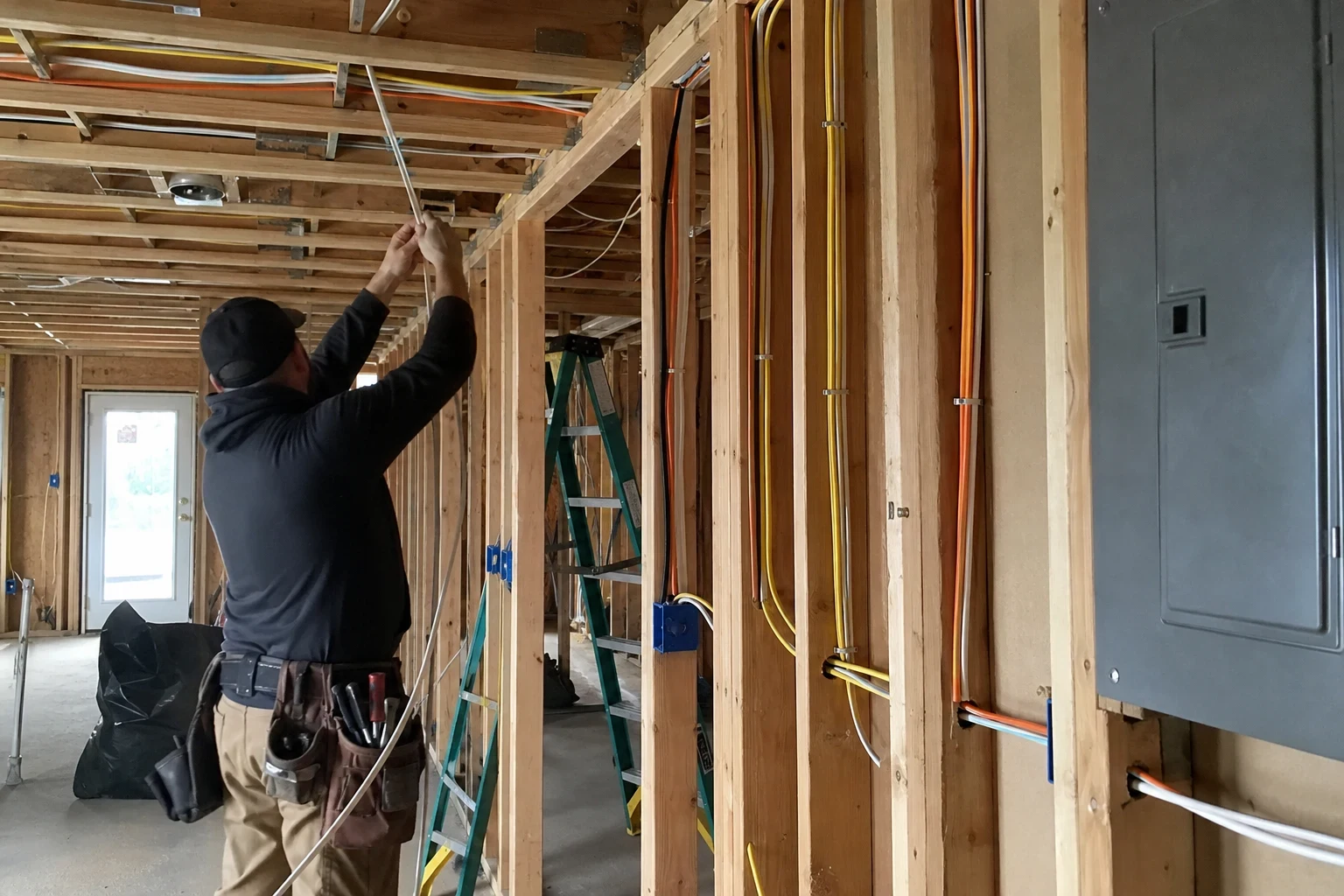
Backup Power You Plan for, Not Scramble For
A battery backup system stores power and hands it to your home the moment the utility goes out. There's no engine, no fuel and no noise. The switchover happens on its own, usually fast enough that clocks and Wi-Fi never notice.
The hard part isn't hanging the battery. It's deciding what it should run. A battery that covers your fridge, a few lights and the furnace fan is a very different job from one meant to carry central air. We start with that conversation, then build the install around your answer. Our licensed and insured electricians do the wiring, and we've been doing electrical work in this part of Texas for 5 years.
Spring storms and summer heat put real strain on the grid around here. The best time to set up backup power is on a calm week, when you can compare options without a dark house pushing you to decide.
What the Install Covers
Load review
We go through your panel circuit by circuit and ask what matters to you in an outage. Medical equipment, a well pump, the fridge and a home office usually top the list.
Battery and inverter sizing
Two numbers matter. Storage, in kilowatt-hours, decides how long you run. Inverter output, in kilowatts, decides how much you can run at once. We match both to your list instead of guessing high.
Backed-up loads panel
Most systems feed a separate subpanel that holds only the circuits you chose. We move those circuits over, label every breaker and leave a simple map at the panel.
Mounting and placement
Batteries have temperature limits. We pick a spot on a garage wall or a shaded outside wall that keeps the unit in its range, with the clearances the maker and code call for.
Permit, inspection and utility steps
We file for whatever permit your city requires and book the inspector's visit. If the utility wants forms before the system goes live, we fill those out and send them in too.
Setup and walkthrough
We commission the system, test a real switchover with you watching and show you the app or display so you can check charge levels yourself.
When a Home Battery Is Worth It
You keep losing food to outages
If storms have cost you a full fridge more than once, a small kitchen system often earns its keep in groceries saved.
A family member needs power for health
CPAP machines, oxygen concentrators and medicine that needs cooling can't wait on a repair crew. Backing up those circuits removes that worry next time the grid fails.
Your office is at home
A laptop, internet equipment and some lights draw very little. A battery keeps you working through brief outages, silently.
A generator isn't a good match
Some properties lack a good generator spot, or the owners would rather skip fuel, exhaust and engine upkeep. A battery runs quietly with little maintenance. For longer run times, see our Generator Installation page.
Your panel is close to maxed out
Lights that flicker or breakers that trip when the AC kicks on deserve a look before you add equipment. We'll let you know if a Panel Upgrade should happen first.
Steps in a Battery Install
- 1
Service visit and load list
We check your panel, your service size and possible battery locations, and you tell us what should stay on. That gives us what we need to size the system.
- 2
Written plan and estimate
Your line-item estimate lists the battery size, inverter, subpanel work and any panel changes. If a smaller system handles your list, we tell you.
- 3
Permit and install date
We apply for the permit and pick an install day that suits you. The power is typically off for part of that day, and we give you a rough time in advance.
- 4
Install day
We hang the equipment, run conduit, wire the subpanel and shift over the circuits you picked. We cover floors along our path and clean up before leaving.
- 5
Inspection and handoff
After the inspector approves it, we turn the system on, simulate an outage and show you how it acts when the grid drops.
What Changes the Price
Battery installs range more widely than most electrical jobs, since each system is built from your own list. Neighbors on one street can end up with very different totals. We price once we've seen your panel, and the estimate lists every part so you can plan the spending.
- What you want kept running
- A handful of essential circuits can run on a modest battery. Carrying central air or the whole house needs more storage, more inverter output and sometimes extra batteries.
- Panel and service
- A full or older panel may need work or replacement before the battery can connect. That's frequently the largest swing in price.
- Mounting spot and distance
- Mounting beside the panel keeps the run short. A spot across the garage or on a different outside wall adds conduit and labor.
- Permit and utility rules
- Fees and forms vary with your city and utility. We put whatever applies into the estimate so nothing surprises you later.
Common Home Battery Questions
Something not covered here? (682) 399-7544
How long can a battery keep my home running?
That depends on battery size and what's switched on. A modest system can power lights, a fridge and internet for a long stretch, while central air empties it quickly. We base our estimate on your load list, not the best-case number on the box.
Will a battery run the AC?
It can, but it takes a bigger system, and the inverter has to handle the AC's startup surge. With Texas summers, it's a reasonable thing to ask. We'll look at your unit and tell you plainly whether it works or whether a generator suits you better.
Should I choose a battery or a generator?
A battery is silent, uses no fuel and needs little care, but its stored energy is limited. A generator keeps going as long as fuel lasts, though it's noisier and needs servicing. Some homes suit one, and a few have both. We install each and will explain the trade-offs.
Is the permit handled by you?
Yes. The permit is part of our work, and we book the inspection with the office that covers your address. Any paperwork the utility asks for, we take care of too, so there's nothing for you to track down.
Does a battery require a new panel?
Not necessarily. When your panel has space and is in good condition, the battery connects through a small subpanel. When it's full, worn or too small, we show you what we found and explain whether a panel upgrade should come first.
How much maintenance does a battery need?
Hardly any. There's no fuel, oil or filter. Check the app from time to time to see that it's charging, and keep the space around it clear so heat can escape. If a reading seems wrong, call us and we'll schedule a visit to look.
Get Your Backup Plan Sorted Before the Next Outage
We'll look at your panel, talk through what you want running and give you a written plan with each cost listed. You decide on your own timeline.